In 2024, TripAdvisor named Bali the world's number one destination. The same year, Indonesia generated $701 in revenue per international tourist. Japan generated $1,445. Thailand $1,509. Vietnam, which most travelers would not rank above Bali in global recognition, generated $1,886. The gap is not random. It follows something that has been in place for a long time.
Some countries in Asia built the infrastructure that moves tourists around the region: the airlines, the airports, the booking platforms, the frameworks that determine how visitors travel, where they sleep, and how much of what they spend stays anywhere near the place they came to see. Others participate with enough institutional weight to hold a reasonable position in that arrangement. And others absorb what the system delivers, carrying the full weight of arrivals without having designed any of the machinery that produces them. Where a destination ends up in that arrangement has nothing to do with how beautiful its coastline is, or how significant its temples are, or how many times its food appears on a global ranking. The position follows the pipes.
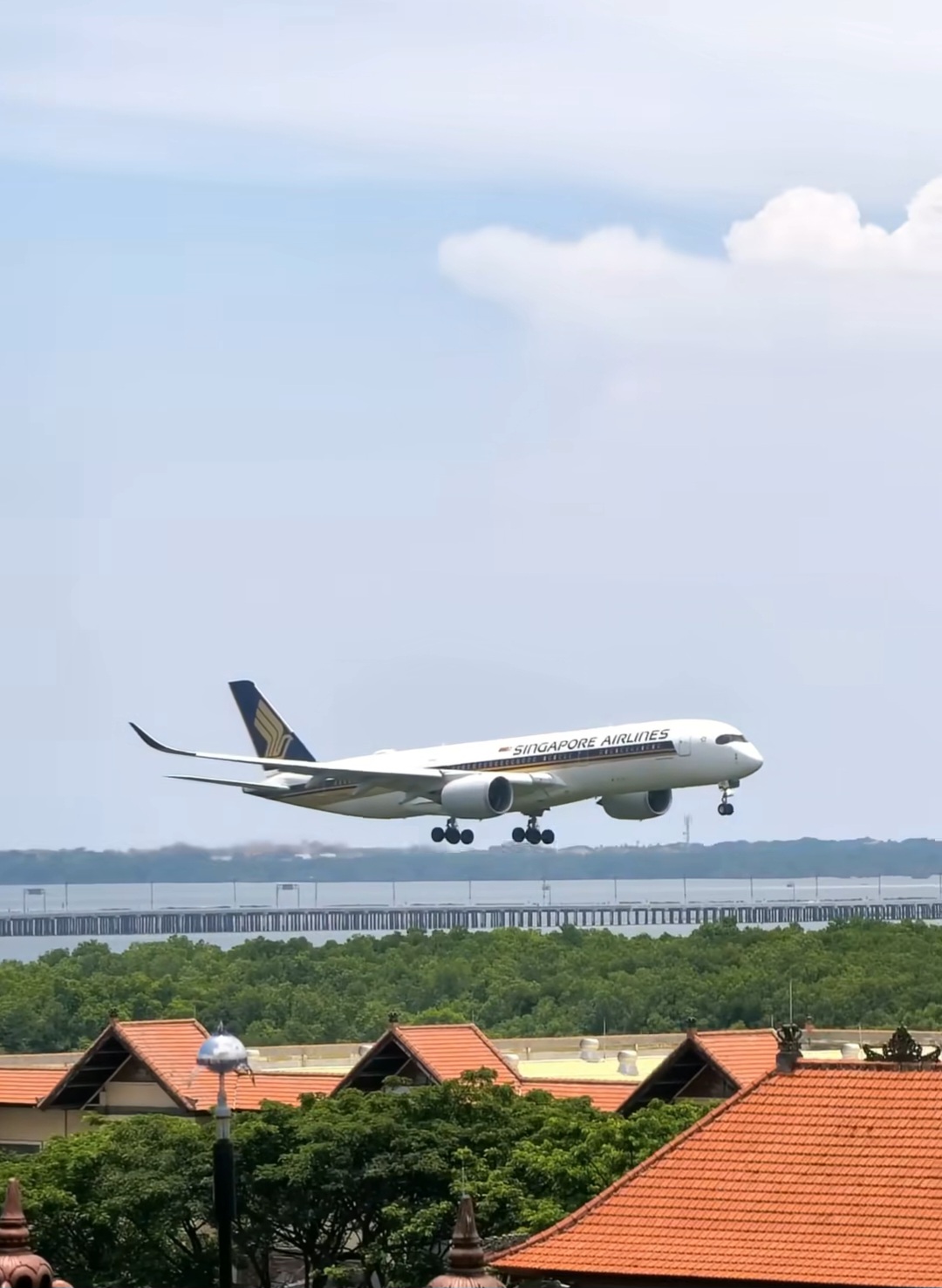
Changi Airport handled 67.7 million passengers in 2024. Forty percent of those flights were transit, travelers passing through Singapore on their way to Bali, or Siem Reap, or Manila, or Da Nang. For years, Indonesians were the single largest national group using Changi, ranking first or second consistently until China took the top spot in 2025. Singapore collects that transit revenue because it built an airport that other countries' tourists find more useful than the airports of the countries they are actually visiting. Singapore Airlines operates nine daily flights between Singapore and Jakarta, and flies directly to Bali six times daily, with its budget subsidiary Scoot adding four more. The tourists are going to Indonesia. The airline taking many of them there is not.
AirAsia, headquartered in Kuala Lumpur, created the low-cost tourism corridors of Southeast Asia. Before it, many intra-ASEAN routes were unserved or priced out of casual travel. The company carried 63 million passengers in 2024. When someone from Seoul books a budget trip to Bali, there is a reasonable chance AirAsia is what makes it financially possible. Bangkok Airways owns Koh Samui Airport outright, a private Thai company with a monopoly on air access to one of Thailand's most visited islands, and near-monopoly routes into Siem Reap, which is Cambodia's primary reason tourists go to Cambodia at all. Nobody finds this unusual because it isn't.
Garuda Indonesia, across the same period, has posted cumulative losses of $2.39 billion, with negative equity of $1.54 billion, forty percent of its fleet grounded, and a $1.4 billion state bailout that changed nothing about the direction. Revenue fell in a year when Indonesia's aviation market was recovering. The practical consequence is that Indonesia cannot determine who flies its tourists in, at what price, or on what schedule. Foreign airlines make those decisions.
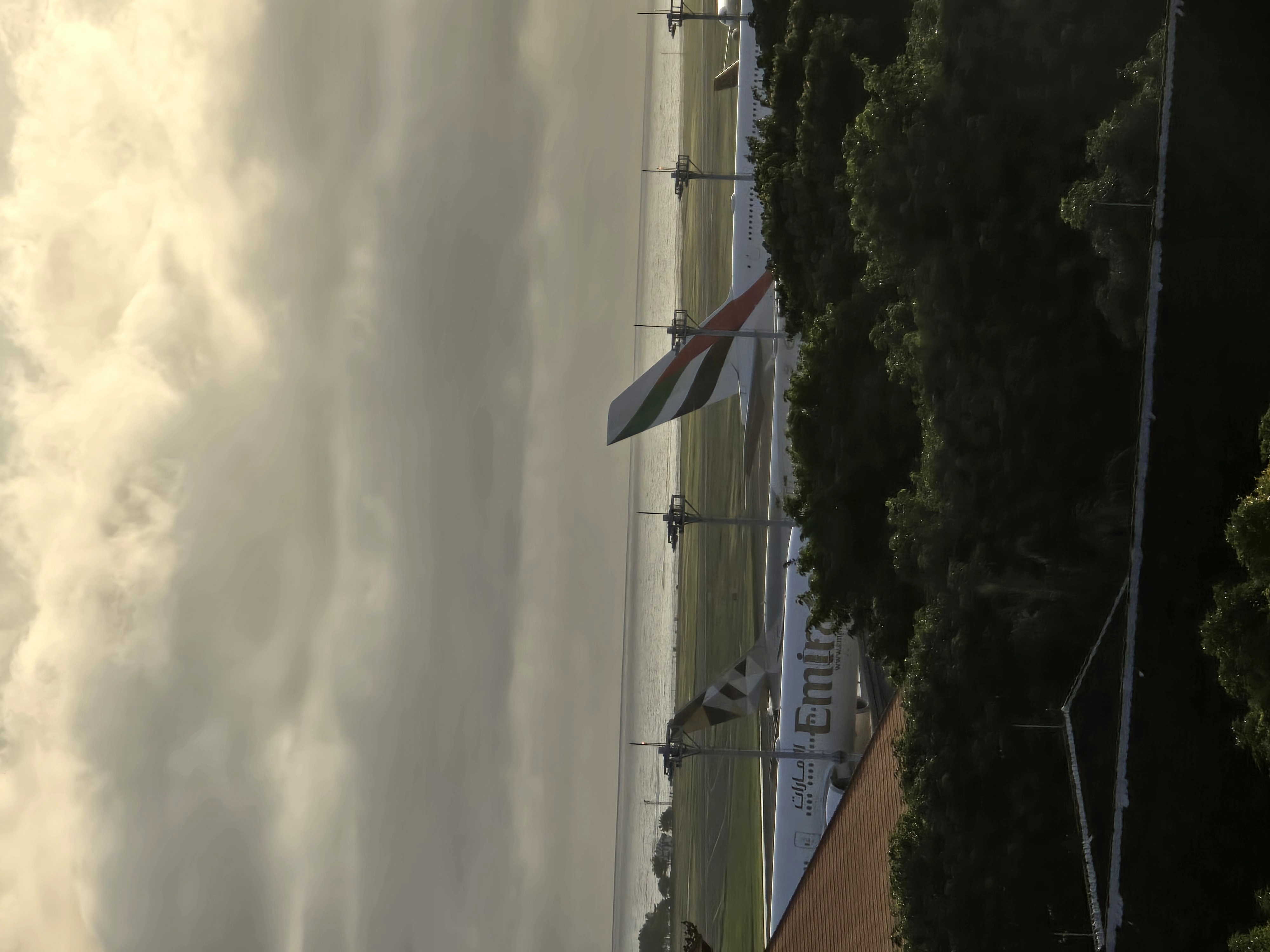
There was a time when boarding Garuda felt like something. The cabin scent, the traditional music playing as you settled in, the sense that this was Indonesia presenting itself on its own terms. That feeling has mostly gone. In the last five to ten years the people I know have quietly moved to Singapore Airlines, and the conversation that comes up is no longer about Garuda recovering but about whether SIA should just acquire it, the way Air France absorbed KLM. Someone always responds that if SIA acquired Garuda, Garuda would probably take SIA down with it. The joke lands because it is close enough to the truth to be uncomfortable. Flying Garuda now feels like paying a premium for a version of luxury that stopped being updated around 2010. What I feel about that is not quite anger and not quite resignation. It is closer to the frustration of watching something that should work, refuse to.
Getting tourists to the country is one part of it. What happens to the money once they arrive is another. Agoda's parent company is headquartered in Norwalk, Connecticut. Agoda itself is the number one online travel platform across Malaysia, Thailand, Singapore, Hong Kong, and the Philippines. Its commission runs between 15 and 25 percent per booking, and its contracts prevent hotels from offering lower prices anywhere else. A guesthouse in Seminyak that wants access to international travelers has one realistic option: accept the terms, pay the commission, and hope the volume covers it. Trip.com commands between 40 and 50 percent of China's online travel market, serving more than 300 million monthly active users. Its decisions about which destinations to promote, which hotels to surface, which cities to feature, move tourist flows across Asia in ways that show up directly in arrival statistics. International bookings on the platform grew 70 percent year-on-year in 2024.
Traveloka, founded in Jakarta in 2012, holds 51 percent of Indonesia's online travel market with commission rates lower than international competitors, and a PwC study found it contributed $10 billion in gross economic value to Indonesia between 2019 and 2022. Its PayLater service has extended travel credit to 6 million users in a country where 5 percent of the population holds a credit card. Outside Indonesia, Traveloka is nearly absent. One platform that works locally does not change what the rest of the region is dealing with, but it does make the gap more legible.
Cambodia makes it concrete.
Angkor Wat is among the most recognized monuments on earth, drawing visitors who fly specifically to see it from distances that nothing else nearby would justify. Bangkok Airways holds near-monopoly air access to Siem Reap. Thailand accounts for 32 percent of Cambodia's international arrivals, many entering through land crossings and spending accordingly. Chinese tour operators run closed-loop circuits that move travelers through Chinese-owned hotels, restaurants, and souvenir shops, with minimal leakage into the Cambodian economy. A study found that 28 percent of tourism revenue leaked out of Cambodia despite only 15 percent of its tourism infrastructure being foreign-owned.
In mid-2025, Thailand closed its land border crossings with Cambodia over a territorial dispute. The dispute had nothing to do with Angkor. The monument stayed where it has been for nine centuries. Ticket sales fell 30 percent year-on-year in the opening months of 2026. Between January and May 2025, the site recorded 527,577 tickets against 1.1 million in the same period of 2019. A neighboring country made a decision about its own borders, and Angkor lost half its visitors.
Bali runs the same pattern at larger scale. Seven million international visitors in 2025, the highest in history. Ngurah Rai handling 23.9 million passengers against a capacity of 24 million. Forty-five percent of Indonesia's international arrivals entering through a single island that makes up 1.4 percent of the country's land, a concentration that has increased since the Ten New Balis diversification policy launched in 2016. An estimated 85 percent of Bali's tourism economy is controlled by operators from outside the island, from other Indonesian provinces and from abroad. Research from Udayana University found that four and five-star chain hotels experience 55 percent revenue leakage. Non-star hotels leak 2 percent. The premium tourism that quality tourism policies are designed to attract extracts more value per visitor than what it is meant to replace.
None of the things that would change this picture are within Bali's authority to decide. The carrier is a national SOE. The airport is managed by a central government entity. Immigration enforcement, visa policy, and the levy collection mechanism all sit in Jakarta. The diversification program was announced by the Ministry of Tourism. Bali can regulate land use and collect its own local taxes, but the infrastructure that determines how many people arrive, by which airline, through which platform, and how much of what they spend stays in the economy, none of that is the island's to govern. The island carries more than it was built to carry, and the decisions that would change the load are made somewhere else.
Vietnam is not a success story. It is just a useful position to look at. Seventeen and a half million international arrivals in 2024, thirty-nine percent growth year-on-year, the fastest in Asia, with no tourist tax and a more distributed tourism geography across the country. Vietnam has no Bali, no single site pulling 45 percent of national arrivals. Its aviation sector recovered faster. Its diaspora built culinary presence in cities around the world without a government program directing it. Vietnam did not build Singapore's transit infrastructure or escape the same OTA commission structure. It is just further from the most exposed position in the system, which is a different thing from being outside the system.
Everything that drives tourism in this region was already there before the system arrived. Angkor was built in the twelfth century. Bali's subak system managed water for over a thousand years before anyone put it in a guidebook. Boracay's sand was written about before the runway existed. The things that move millions of people across time zones every year were not produced by a booking platform or a low-cost carrier or an airport transit agreement.
What the industry built on top sits on those assets and takes a cut of what they are worth. Twenty-five percent off every booking. A monopoly on the only flight to a heritage site. A carrier that routes the fare revenue home to a different country. Countries with the infrastructure collect from tourism twice over. Countries without it collect once, partially, and carry the rest in their roads, water supply, and housing markets, in the distance between what the industry generates and what reaches the people inside it.
The policy conversation in most of these destinations focuses on arrival management: levies, caps, quality tourism frameworks, bank statement screening at the gate. These responses address the pressure without addressing its source. What Indonesia needs before any of those conversations land with real weight is a carrier that can fly the routes, a platform with enough market presence to negotiate its own terms, an airport with room to grow, and a levy that collects from everyone who passes through rather than a third of them. Bali cannot build any of that. The authority and the budget sit elsewhere, and that gap between where the weight falls and where the decisions get made is its own kind of problem.
The attraction was never in question. It was always the point of the whole arrangement. What I keep coming back to is not whether Indonesia can fix this, but why the instinct has been to keep selling the landscape when the landscape is already sold, already known, already ranked number one, and still generating $701 per tourist. The system is what's missing. And unlike the beaches, it doesn't build itself.